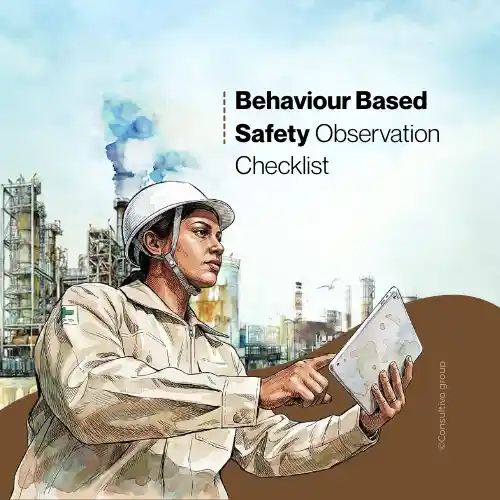
Why use a Behaviour Based Safety Observation Checklist?
A behaviour based safety observation helps you understand how people actually work – not just what the procedure says. Using a structured BBS checklist, observers can note safe and unsafe behaviours, trends, and opportunities for improvement.
This practical tool helps teams:
- Promote proactive h&s culture and accountability
- Identify recurring patterns in unsafe acts or near misses
- Support Safety leadership training and employee engagement
- Turn observations into actionable safety improvements
BBS observation checklists make data-driven safety decisions possible, transforming safety from a compliance task into a shared responsibility.
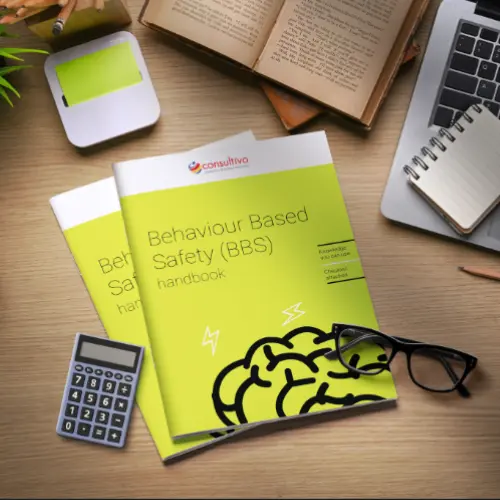
Our free Behaviour Based Safety Checklist is designed by Consultivo experts based on years of field experience across industries.
Use it to:
- Conduct effective safety behaviour observation rounds
- Record key actions, conditions, and at-risk behaviours
- Analyse trends from multiple BBS observations
- Support internal bbs safety training and coaching
👉 Download your free BBS Observation Checklist now and start building a safer, more engaged workplace.
What’s inside the BBS Checklist
Your downloadable checklist includes:
- Observation categories (e.g. PPE use, ergonomics, equipment handling)
- Rating scales for safe/unsafe acts
- Space for observer notes and corrective actions
- Section for safety feedback and learning points
This behaviour based safety checklist can be used for on-site audits, toolbox talks, or digital BBS data collection.
Benefits of Behaviour Based Safety Observations
Regular BBS observations help you:
- Improve worker awareness and participation
- Build a strong behaviour based safety culture
- Provide measurable insights for safety surveys and performance reviews
- Complement other programmes like safety culture survey and behaviour based safety training
When effectively implemented, BBS observations lead to fewer incidents, improved morale, and long-term safety excellence.
What is Behaviour Based Safety (BBS)?
Behaviour Based Safety (BBS) is a proactive approach to managing workplace safety. It focuses on how people behave while working and uses observation, feedback, and positive reinforcement to encourage safer actions. Grounded in behavioural science, BBS recognises that most incidents happen due to unsafe behaviours rather than unsafe conditions alone.
A well-designed BBS programme helps employees take ownership of their safety and that of their peers. It encourages regular BBS observations, open conversations, and continuous improvement across teams. Using structured behaviour based safety checklists, organisations can identify patterns, find root causes, and take action before risks escalate.
Key Elements of Behaviour Based Safety
- Antecedent–Behaviour–Consequence (ABC) Model: Understand what triggers a behaviour and how consequences influence future actions.
- Balanced Reinforcement: Apply a well-planned mix of positive and corrective reinforcement — recognise safe actions, address unsafe ones constructively, and ensure every feedback leads to learning and improvement.
- Employee Involvement: Engage workers in peer observations, open discussions, and feedback loops to build shared responsibility.
- Data-Driven Decisions: Use observation data to identify behaviour patterns, predict risks, and guide continuous safety improvement.
A thoughtfully designed behaviour based safety process blends encouragement, accountability, and data insight — building a stronger, self-sustaining h&s culture.
Related Resources
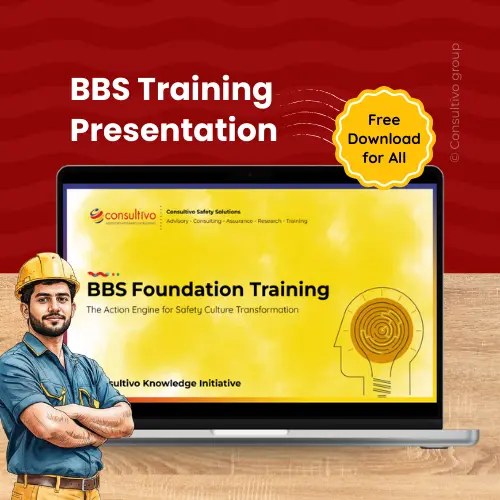
- Behavioral based safety ppt – for awareness and toolbox sessions
- BBS safety training – tailor-made for supervisors and teams
- Safety leadership training – build proactive leadership in safety
- Safety surveys and safety culture survey tools – measure and improve engagement
Frequently Asked Questions
Start your SMILe journey today
Start your journey towards a stronger safety culture
Strengthen your organisation’s h&s culture with actionable insights from real workplace observations.
Download the BBS Observation Checklist now and start improving your behaviour based safety performance today.
👉 [Download the Free Checklist]