Water Audit: Know Where Every Litre Goes and Where It Is Lost
Water Balancing · Inventorization · Efficiency
Water audit services from Consultivo measure how your site gets, uses, reuses, loses and discharges water, build a water balance that adds up, and rank the savings by payback. We say plainly which audits we carry out and which need a certified auditor.
01 / What you get
Water Audit Services: What You Get
You get a water balance that adds up, the losses found, and a ranked plan to cut water use.
In brief: A water audit is a structured study of how a site gets, uses, reuses, loses and discharges water. Consultivo's water audit services cover industrial plants, commercial buildings, campuses and hotels. We carry out corporate and voluntary water audits, and non-statutory independent assurance of water data. We do not hold the approval needed to sign a statutory audit under a groundwater NOC, and the next section explains how to tell which audit you need.
A water balance that adds up
Every litre in, used, reused, lost and discharged, by area and by utility, with unaccounted water shown, not hidden.
Losses and savings, found and ranked
A leak and loss survey, a review of how each utility performs, and measures ranked by saving, investment and payback.
Evidence you can use
Inputs for GRI 303 and BRSR water data, a baseline for a water neutral claim, and the base for a water efficiency management system.
Who This Is For
- Plant, EHS and sustainability heads who need to know where their water goes
- Facilities and operations leaders of buildings, campuses, hotels and hospitals, who need water audits for business sites
- Sustainability and ESG teams who need defensible water data for BRSR and GRI 303
- Companies planning zero liquid discharge, ISO 46001 or a water neutral claim, who need a baseline first
02 / Which audit
Which Water Audit Do You Need? Statutory, Corporate or Readiness Review
Before you ask for a proposal, check which kind of audit you need. It saves time for both of us.
Required by the CGWA for industries abstracting groundwater above 100 cubic metres a day. It must be signed by a certified water auditor of an agency approved by CGWA. We do not hold this approval, so we do not carry out statutory audits.
For cost savings, ESG and BRSR water data, ISO 46001 or neutrality baselines, buildings and campuses, and ZLD planning. This is the audit we carry out.
Before a statutory audit, a review of your meters, records and water balance, so that your certified auditor starts with data that holds.
A non-statutory, independent third-party review of water data, usually for ESG and BRSR reporting, where we did not advise on or build the system behind the numbers.
Is a Water Audit Mandatory in India?
It depends on who you are. The guidelines of the Ministry of Jal Shakti, administered by the CGWA (notified 24 September 2020 and amended 29 March 2023), require an industry abstracting groundwater above 100 cubic metres a day to have a water audit once every two years through certified auditors of agencies approved by CGWA, to send the report to the CGWA within three months, and to cut groundwater use by at least 20 percent over three years. Other sites may be asked for audits through consent conditions, tenders or their own targets. Read the CGWA standard operating procedure on audit report format. Check the conditions of your NOC, and if a tender names a certified auditor, check that before asking us for a proposal.
03 / Why Consultivo
Water Audit Consultants in India You Can Rely On
Independent advice, a measurement-first method and a plain statement of what we do.
Looking for a water audit consultant in India? We carry out corporate and voluntary water audits for industry and buildings across the country.
AA1000 licensed assurance provider
Licence 000-945, with verification available on request.
Approved by IFC and PSCI
Approved ESG consultant of IFC (World Bank Group), and approved auditor of the Pharmaceutical Supply Chain Initiative (PSCI), UK.
A measurement-first method
We measure and check before we estimate, and we label each figure measured, estimated or reported.
A balance that adds up
Unaccounted water is shown, not hidden, so you can see how far to trust each number.
Honest about scope
We say at the start whether we can serve you, so no one spends time on a proposal that cannot proceed.
Advice and assurance kept apart
Where we advised on or built the system behind a number, we do not assure that number.
04 / Overview
What Is a Water Audit? Water Audit Consultancy Solutions Explained
A water audit is a systematic assessment of the water that enters a site, where it is used, reused and lost, and what leaves as discharge. It ends in a water balance, a list of losses and savings, and a plan to act. Water is a critical resource with high strategic importance to a business. Our water audit consultancy solutions help you manage water as part of your sustainability strategy, meet internal policies, legal obligations and water commitments, and report water data with confidence.
Industrial Water Audit
An industrial water audit studies the process, the utilities and the treatment systems within the fence. It covers cooling towers, boilers, softeners, RO and DM plants, effluent and sewage treatment, reuse and rainwater harvesting where present, and it shows water use per unit of production. Our industrial water audit work in India spans manufacturing, cement, chemicals and other sectors.
Building and Campus Water Audit
Building water audits, including commercial water audit and business water audit work for offices, malls, hotels, hospitals and campuses, study domestic use, cooling and air conditioning, kitchens and laundry, landscaping, sewage treatment and rainwater use. They show water use per person or per unit of area.
Support Modes: Remote, On Site or Blended
We deliver remotely, on site or as a blend of both, so you get the right depth without needless travel.
What Problem We Are Solving
Many sites cannot say where their water goes. We help you analyse water-related risks and opportunities as part of your sustainability strategy.
05 / Method
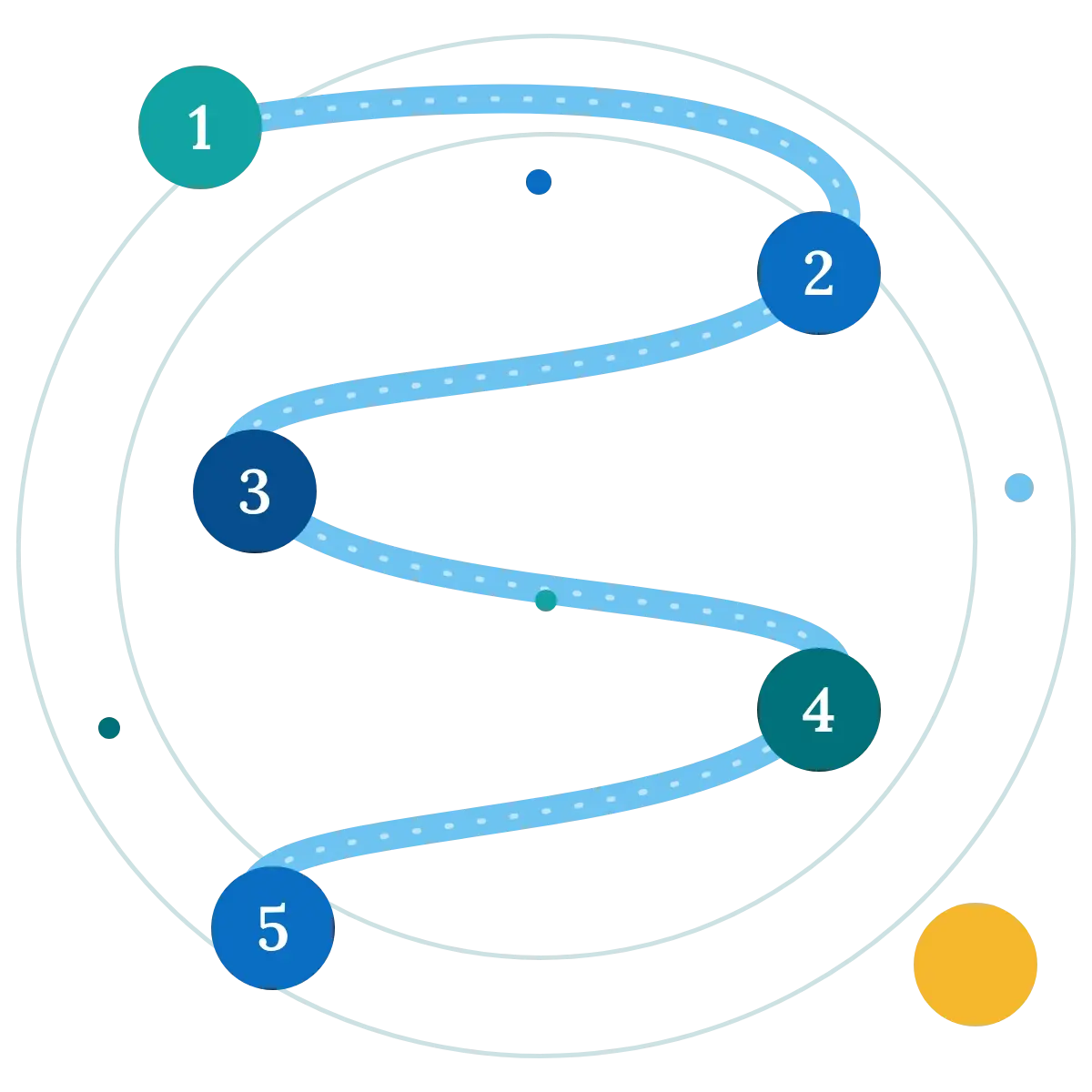
Water Auditing Method: Five Steps From Inventory to Recommendations
Water auditing at Consultivo follows five steps. Several methods are in use. We adopt the water balance method of the American Water Works Association unless your sector or regulator requires another, we draw on the Central Water Commission's general guidelines (December 2005), which set out supply and usage study, process study, system audit, discharge analysis and the audit report, and we can build a custom method to suit your requirement. The consumption pattern is established through field visits, measurements, interviews and analysis of the data available, and the work looks at both short-term and long-term water management.
Step 1: Initial Inventory and Water Mapping
We collect site maps, process flow diagrams, equipment lists, pipeline layouts, the meter register, and water demand and consumption data for the period. We draw a water map and an inventory of every source, tank, line and use, so that inventorization is complete before any measurement starts.
Step 2: Water Withdrawal and Use Inventory
We list every source, such as municipal supply, groundwater, surface water, tanker supply, harvested rainwater and recycled water, with its monthly withdrawal. We then list uses by category: process, each utility, domestic use, green belt, washing and dust suppression, and the points of discharge. Each category is shown separately, with no miscellaneous bucket.
Step 3: Water Auditing: Metering, Flow Measurement, Leak Detection and Loss Estimation
We review the metering system for coverage and condition, measure flows where meters are missing, and check recorded volumes against independent measurement where possible. This water audit survey also looks for leaks and overflow points and estimates the losses. It checks how each utility performs, such as cooling towers, boilers, softeners, RO and DM plants, and sewage and effluent treatment, and records the water quality each use needs, which decides what can be reused.
Step 4: Water Balance
We reconcile water in with water used, reused, lost and discharged, by area and by utility. This water balancing shows the unaccounted water and how large it is. For distribution systems such as townships and campuses, we separate authorised consumption, apparent losses and real losses, as the AWWA method does.
Step 5: Audit Recommendations
We set out water saving measures for the process, each utility, domestic use, the green belt, washing and dust suppression, with the saving in kilolitres a day, the investment, the payback and the technical and environmental feasibility of each. We group them as short, medium and long term, rank them, and discuss them with operators and with management.
06 / Water balance
Water Balance Study: How the Numbers Add Up
A water balance study is the core of the audit. It rests on a simple rule: water in equals water used, reused, lost and discharged, plus any change in storage. Where the two sides do not match, the difference is unaccounted water, and we show it. An industrial water balance assessment draws the flows between the source, each utility, the process, the treatment plants and the discharge, so you can see where each litre goes. Where it is scoped, we draw the balance for the present case and again for the case after the recommended measures, so the benefit of each measure shows against the starting point.
Specific Water Consumption: Your Benchmark Number
Specific water consumption is the water used per unit of output: per tonne of product, per person or per square metre. We calculate it for the audit period and, where data exist, for the last two years, and compare it with a sector benchmark where one is available. It gives you one number to track after the audit.
Measured, Estimated or Reported
We label every figure. Measured means we or your site measured it. Estimated means we calculated it from dimensions, operating hours or standard rates. Reported means your team gave it to us and we did not check it. The label sits beside each number, so a Board, a lender or an assurance provider can see how far to trust it.
07 / Losses
Water Loss and Leakage Assessment: Finding What You Cannot See
Losses hide where a meter does not reach. Our water loss and leakage assessment looks for leaks in pipes, valves and fittings, overflows from tanks and sumps, blowdown from cooling towers and boilers, reject water from RO plants and softeners, and drains left running. It also looks for apparent losses: meters that read wrongly and uses nobody has recorded. Each loss is estimated and added to the balance, so the total reconciles.
08 / Reuse
Reuse, Recycling and Zero Liquid Discharge Readiness
Once the balance is known, reuse is the next saving. We examine which streams can be reused where the quality allows, such as treated sewage or effluent for cooling tower make-up, the green belt, washing or dust suppression, and how harvested rainwater can replace fresh water. A zero liquid discharge (ZLD) readiness review then tests whether your balance and treatment can meet the zero discharge test: what leaves the site, how much, and what could be reused instead. For one tyre manufacturer we built the water accounting and evidence behind a plant's ZLD certification, which an independent certifier assessed.
Reduce, Reuse, Recycle
Employ new processes and change behaviour to reduce water consumption while keeping product quality high.
Collect wastewater streams within the facility and reuse them where appropriate.
Investigate and employ new technologies to treat water so it can be used again within the plant.
09 / Deliverables
What You Receive From a Comprehensive Water Audit
- An understanding of the water consumption pattern of the facility within the fence, with a detailed water balance diagram and water mapping
- The major areas of potential water savings
- A water consumption audit by category, including specific water consumption
- A compliance check against applicable legal requirements
- Recommendations and strategies, ranked by saving, investment and payback
- An awareness and sensitisation session on water conservation, customised to your facility
- Inputs for disclosure: alignment with GRI 303 indicators and SDG 6, 13 and 14
We work with global standards, including GRI 303, ISO 46001 and the AWWA water balance method.
10 / Impact stories
Water Audit in Practice: Three Results
Three anonymised results. Each says whether the result was measured, estimated or reported, and what the study recommended, not what the client did next.
Estimated Savings in a Cement Plant With Almost No Meters
The plant had few meters and drew its water from a river. We reviewed the metering, measured flows, surveyed for leaks and modelled the terrain around the plant.
658,000 kilolitres a yearResult type: an estimated savings potential: leaks (about 90,000), the township (about 165,000) and storm water stored in abandoned quarries (about 400,000). These are potential savings, not measured savings.
The study pointed to: a water management unit, meters at every major demand point, acoustic leak detection, pressure management and a GIS map of the water network.
A Harvesting System That Was Recharging the Wrong Aquifer
A hydrogeology-led audit found that unlined tanks and about 855 metres of unlined drain were sending fresh rainwater into a shallow brackish aquifer that nobody uses.
Result type: estimated, on a tentative water balance. Lining two tanks and the drain would hold about 12,000 cubic metres for irrigation and could free up to about 50,000 cubic metres a year.
The study pointed to: lining the tanks and drain, annual calibration of flow meters by an accredited body, meters on both sewage plants, shorter laundry rinse cycles (about 720 cubic metres a year) and a long-term move to treated surface water for drinking supply.
Water Accounting Behind a Zero Liquid Discharge Certification
We built the water accounting and evidence behind one plant's zero liquid discharge certification, which an independent certifier assessed.
Result type: measured plant data for one year, with about 205,000 cubic metres taken in and about 100,000 cubic metres of treated effluent reclaimed.
The study pointed to: more flow meters at production and cooling points, regular calibration checks and closer matching of records to water bills, so the next balance rests on measured data.
11 / Disclosure
Inputs for Disclosure: GRI 303 and BRSR Water Data
GRI 303 defines water consumption as water withdrawal minus water discharge. A water balance gives you both, by source and by destination, so your disclosure rests on a balance, not a guess. The audit also supports BRSR water data, and our BRSR reporting service can use it. For the water behind your supply chain, add a water footprint assessment.
12 / Next
After the Audit: Hold the Savings and Prove the Claim
Savings fade without a system. A water efficiency management system keeps them: see our ISO 46001 consulting. If your goal is a water neutral or water positive claim, the water balance is the baseline: see our water neutrality consulting. Rainwater harvesting beyond the fence, such as ponds and recharge structures, is covered by our watershed water conservation assessment. Your team can build skills through our Water Management Course.
13 / Independence
How We Keep Advice and Assurance Apart
Where we advised on or built the system behind a number, we do not assure that number.
We are an AA1000 licensed assurance provider, and we keep that work apart from our advice. Read our Independence and Impartiality Policy.
14 / Questions
Water Audit Services: Your Questions Answered
Each answer starts with the direct answer, then adds the detail.
What are the key benefits of Water Audit?
A water audit shows where water is used and lost, so you can cut losses, lower cost and risk, and report water data with confidence. It improves your understanding of the water system from source to disposal, and leak detection finds small problems before they become large ones. A water audit can reduce water losses, improve financial performance, improve the reliability of supply, enhance knowledge of the distribution system, increase efficiency in the use of existing supplies, better safeguard public health and property, improve public relations, and reduce legal liability and disruption.
How Consultivo can help in Water Audits?
Consultivo provides water audit projects, water efficiency projects, water footprint work, water balancing, and water-related disclosure and reporting. Consultivo is one of the leading ESG and Sustainability Consultants in India, with global experience in Carbon Footprint, water audit, Water Footprint, GRI Based Sustainability Reporting, ESG Gap Assessment and ESG Reporting, BRSR Reporting and more. Find more on our role as independent environmental consultants.
What is a water audit?
A water audit is a systematic assessment of the water that enters a site, where it is used, reused and lost, and what leaves as discharge. It ends in a water balance, a list of losses and savings, and a plan to act.
What does a water audit include?
A water audit includes an inventory of sources and uses, a review of metering, flow measurement, a leak and loss survey, a water balance, a check of utilities and treatment, and ranked recommendations with saving, investment and payback.
Is a water audit mandatory in India?
It depends on who you are. An industry abstracting groundwater above 100 cubic metres a day must have a water audit once every two years through certified auditors of agencies approved by the CGWA, and send the report to the CGWA within three months. Other sites may be asked for audits through consent conditions, tenders or their own targets. Check the conditions of your NOC.
Who can carry out a statutory water audit?
A certified water auditor of an agency approved by the CGWA signs it. Consultivo does not hold this approval, so we do not carry out statutory audits. We carry out corporate and voluntary water audits.
What is the difference between a statutory and a corporate water audit?
A statutory audit meets a legal requirement, such as a groundwater NOC condition, and must be signed by a certified auditor of an approved agency in a prescribed report format. A corporate or voluntary audit serves your own goals, such as savings, ESG data or a baseline, and is not bound to that format.
Do you provide independent assurance of water data?
Yes, as non-statutory third-party assurance, usually for ESG and BRSR reporting, where we did not advise on or build the system behind the numbers. It is separate from a statutory audit. See our independent assurance of BRSR, ESG and sustainability reports.
What is a water balance?
A water balance accounts for all the water entering a site and where it goes: used, reused, lost and discharged. Water in equals water used, reused, lost and discharged, plus any change in storage, and any gap is unaccounted water.
What is specific water consumption?
Specific water consumption is the water used per unit of output, such as per tonne of product, per person or per square metre. It lets you compare periods and benchmark against similar sites.
How are water losses found?
We check the metering system, measure flows where meters are missing, survey for leaks and overflows, and compare recorded volumes with measured ones. The difference is estimated as loss and added to the balance.
Can a water audit support BRSR and GRI 303 reporting?
Yes. GRI 303 defines water consumption as water withdrawal minus water discharge, and a water balance gives both, by source and by destination. The audit supports BRSR water data. See our BRSR reporting service.
Do you audit buildings as well as industry?
Yes. We audit industrial plants, commercial buildings, campuses, hotels and hospitals.
How long does a water audit take?
It depends on the size of the site, the number of meters and the scope. Your quote carries a dated plan after a short scoping call.
What decides the quote?
The number of sites, the area and utilities, how much is metered and the depth of study. We quote after a short scoping call.