
The concept of order and organisation in the work environment is not new. It has been a cornerstone of effective management for centuries. From ancient practices to modern management systems, the principle remains constant: a well-organised workspace is the foundation of efficiency, safety, and quality.
The 5S workplace methodology is a structured, systematic approach to achieving and maintaining such a high-performance work environment. Originating in Japan, 5S is far more than mere housekeeping.
It is a philosophy of continuous improvement, or kaizen, that forms the bedrock of a successful business. This system transforms chaotic areas into streamlined operations. It fosters a culture of discipline, accountability, and excellence throughout the organisation.
In this comprehensive guide, we, as Nalanda v0 – the Knowledge Repository of Consultivo Group, will explore the Five S system. We will detail its principles, explain its benefits, and provide actionable insights for its successful integration. Implementing 5S is an essential step towards achieving operational excellence and aligning with global standards for responsible business practices.
Understanding the 5S system and the foundational 5 S workplace
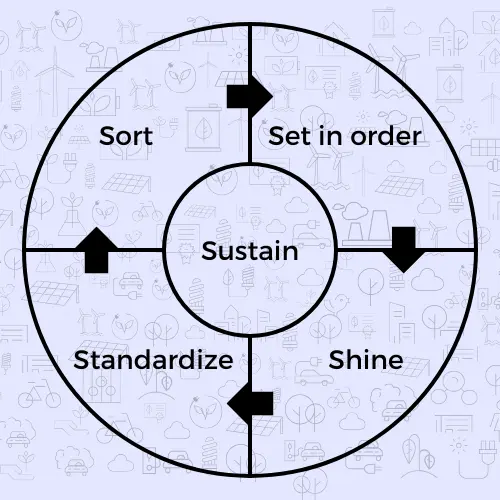
What exactly is the 5 S workplace methodology? It is a lean manufacturing tool that focuses on creating a visual, efficient, and safe workspace. The system is built around five Japanese words, which have been translated to English equivalents starting with the letter ‘S’.
| Japanese Term | UK English Translation | Purpose |
|---|---|---|
|
Seiri |
Sort |
Separate the necessary from the unnecessary |
|
Seiton |
Set in order |
Organise the necessary items for easy access |
|
Seiso |
Shine |
Clean the workspace and equipment |
|
Seiketsu |
Standardise |
Establish procedures to maintain the first three S’s |
|
Shitsuke |
Sustain |
Make 5S a habit and a long-term commitment |
The goal of 5S is to eliminate waste in all its forms. This includes wasted time, wasted motion, wasted materials, and wasted space. By addressing the physical aspects of the workplace, organisations unlock profound improvements in productivity and morale.
The ancient roots of 5S
The inspiration for this focus on knowledge and systematic management comes from the great university of Nalanda. Ancient Nalanda was a centre of learning built on meticulous organisation and knowledge management.
Similarly, the 5S system encourages methodical planning and precision. It is not just a modern Japanese technique. It is a universal commitment to order, which enhances knowledge retention and systematic operation, making it perfect for any 5S for company initiative.
The 5S system as a foundation for Lean
The methodology of the 5S workplace is intrinsically linked to the broader principles of Lean management. Lean principles aim to maximise customer value while minimising waste. The 5S system is the primary tool for attacking the waste caused by disorganisation.
For instance, the time spent looking for tools or materials is a direct form of waste (motion and waiting). By adopting 5S, a company lays the critical groundwork for advanced quality management systems and continuous improvement.

Explore our 5S Training and Certification
The five pillars of the 5 S workplace system
A successful implementation of a 5S programme requires a deep understanding of each of the five steps. These steps are sequential and interdependent. Skipping a step will undermine the entire process.
Seiri – sort: eliminating the unnecessary
The first S, Sort, is arguably the most challenging step. It involves reviewing all items in the factory 5S workplace or office. The goal is to determine what is truly needed to perform the work.
- Action: Go through every tool, piece of equipment, and document.
- Decision: Classify items as necessary or unnecessary.
- Red Tagging: Items deemed unnecessary, broken, or infrequently used are tagged with a “red tag.” This signifies they should be removed.
The primary outcome of Seiri is a clean, less cluttered environment. This step immediately frees up valuable space. It also reduces potential hazards.
Seiton – set in order: efficient organisation
Set in Order focuses on the efficient arrangement of necessary items. Every item should have a designated place. It should be labelled clearly.
- Principle: “A place for everything, and everything in its place.”
- Techniques: Use visual controls like floor marking, shadow boards, and labels. Arrange items based on frequency of use. Frequently used items should be closest to the operator.
Result: Reduced search time and wasted movement. This directly contributes to higher productivity. It supports the principle of 5S of housekeeping by establishing a repeatable structure.
Seiso – shine: keeping the area clean
Seiso is about thorough cleaning. It moves beyond a quick tidy. It treats the cleaning process as an inspection.
- Activity: Clean the workspace completely. Clean equipment, floors, and surfaces.
- Inspection: While cleaning, operators look for signs of wear, damage, or potential issues. Cleaning becomes a form of preventive maintenance.
- Link to ESG: This step aligns with the environmental aspect of ESG (Environmental, Social, and Governance). A clean environment reduces the risk of spills and contamination. This demonstrates responsible stewardship over operational assets.
Seiketsu – standardise: maintaining consistency
Standardise aims to institutionalise the first three S’s. It prevents the workplace from slipping back into disorder.
- Documentation: Create clear, easy-to-follow standards and procedures for Sort, Set in Order, and Shine. Use visual management tools to make the standards obvious.
- Checklists: Develop routine inspection checklists. These ensure that the standards are being met consistently across all shifts and departments.
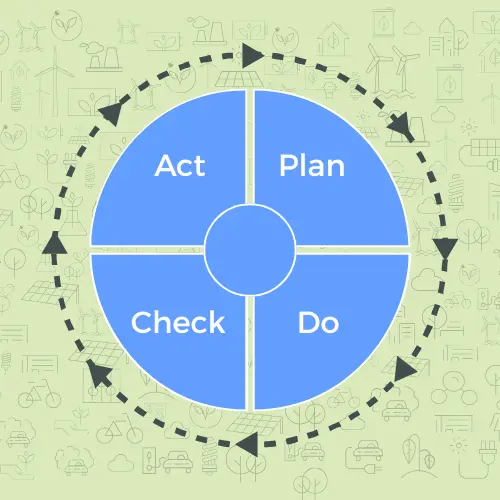
- Continuous Improvement: Standardisation makes it easy to spot deviations. This is where the methodology aligns with the fundamental PDCA (Plan-Do-Check-Act) cycle. Standards represent the ‘Plan’ and ‘Check’ phases, ensuring continuous improvement.
Shitsuke – sustain: making it a habit
Sustain is the most difficult and critical S. It ensures that 5S becomes a permanent part of the organisational culture. It is not a one-off project. It is a way of life.
- Training and Education: Regular refresher training on 5S is vital. Employees need continuous reinforcement of the value of the system.
- Leadership Support: Management must demonstrate commitment. They must lead by example and allocate time and resources for 5S activities.
- Recognition: Recognise and reward teams and individuals who demonstrate excellent 5S behaviour. This encourages ownership. This focus on long-term discipline is the true 5S motto and is essential for preventing decay.
Benefits of implementing the 5S workplace system
The advantages of adopting the 5 S workplace methodology are numerous. They extend far beyond a tidy appearance. They drive measurable business value across various functions. The benefits of 5S contribute significantly to the triple bottom line: People, Planet, and Profit.
Enhancing operational efficiency and productivity
A cluttered workspace directly impacts efficiency. Employees spend time searching for tools, materials, or information. This is non-value-added time.
- Reduction of Waste: Lean management identifies eight types of waste (DOWNTIME). 5S tackles several of these: Defects, Overproduction, Waiting, Non-Utilised Talent, Transportation, Inventory, Motion, and Excess Processing.
- Improved Flow: By implementing Seiton (Set in Order), the layout is optimised. This ensures a smoother material flow and reduced movement. This leads to faster cycle times and increased output. These are clear 5S advantages in a competitive environment.
Improving safety and employee well-being
Safety is a core 5S benefit. A disorganised environment is inherently unsafe. The removal of unnecessary items and the clear marking of necessary ones mitigate risks.
- Accident Reduction: Sorting and Shining remove tripping hazards, fire risks, and unsecured materials. This aligns with the ‘Preventive Action’ component required by standards like ISO 45001 (Occupational Health and Safety Management). This is a practical example of safety kaizen – continuous improvement in safety.
- Morale and Culture: A clean, well-lit, and organised environment shows respect for the workers. It boosts morale. Employees take greater pride in their work and workspace. This focus on well-being and safety is crucial under the Social pillar of ESG reporting frameworks. It addresses key topics in the GRI standards related to occupational health and safety.
Contributing to environmental sustainability
The 5S system promotes resource efficiency, which has a positive environmental impact.
- Waste Reduction: Sorting encourages proper disposal, recycling, or re-purposing of obsolete materials and chemicals. This reduces the amount of material sent to landfill.
- Energy Efficiency: A clean and well-maintained workspace often requires less lighting and less effort to manage temperature. Cleaning also helps identify leaks or operational inefficiencies in equipment. This proactive maintenance contributes to energy conservation, aligning with the objectives of Sustainable Development Goal (SDG) 12: Responsible Consumption and Production. This is a subtle yet powerful 5S housekeeping advantage.
Implementation 5S: best practices for success
Successfully implementing 5S requires more than hanging up posters. It needs a structured plan, commitment, and sustained effort. Organisations should view 5S as an investment in a robust business operating system, not a one-time clean-up event.
Leadership commitment and employee involvement
The failure of most 5S initiatives stems from a lack of commitment from the top.
- Management Support: Leaders must actively participate in 5S audits and activities. They must provide the necessary resources, including time for 5S training.
- Empowerment: 5S must be driven by the people who perform the work. Frontline employees understand their workspaces best. They must be empowered to make the necessary changes. Their active involvement is the essence of Kaizen. It also fosters the 5S and 3c (Commitment, Communication, Coordination) required for success.
Auditing and continuous improvement
How do you know if your workplace 5S programme is working? Through regular, objective auditing.
- Systematic Audits: Implement a formal, scheduled auditing process. Use checklists derived from your Seiketsu standards. The audit should be consistent and fair.
- Visual Management: Make the audit results visible. Use scoreboards or charts to track progress. This visual feedback drives accountability.
- Refining the System: Use the audit results to identify gaps and refine the standards. The final ‘S’, Sustain, is where the benefits truly lock in. It means ensuring ongoing training, recognition, and improvement of the entire system. Organisations must focus on providing practical five S training to keep the knowledge fresh and the commitment strong.
Securing a high-performance 5S workplace
The 5S workplace system is a powerful framework. It transcends basic cleaning. It is a fundamental management system that improves every aspect of an operation. It turns simple order into a competitive advantage. From the smallest office to the largest factory 5S workplace, the principles of Sort, Set in Order, Shine, Standardise, and Sustain are universally applicable.
By rigorously applying these five steps, companies can reduce waste, enhance safety, improve quality, and build a culture of continuous improvement. The commitment to 5 S training is an investment in human capital.
It is an investment that yields substantial returns in operational efficiency and employee engagement. A clean, organised, and standardised workspace is a safer workspace. It is a more efficient workspace.
It also reflects a responsible corporate attitude towards its people and the environment. This foundational discipline is crucial for any organisation striving for business excellence and robust ESG performance.
The long-term benefits of 5S methodology are clear: sustained growth through systematic perfection.

Start your ISO Consulting Solutions journey today

ISO Consulting Solutions
Related solutions
Related Blogs
Let's discuss
Share this post
Category: Blog

About the author
CEO & Chief Mentor, Consultivo
Saikat Basu is the CEO and Chief Mentor of Consultivo. He is a highly accomplished strategic and operational risk management professional with over 30 years of global experience in ESG consulting, auditing, and training. Passionate about capacity building, he has delivered numerous programmes across sectors, helping organisations strengthen safety, sustainability, and responsible business performance.
With a career spanning more than three decades, he is a key proponent and expert in Management Systems, focusing on Quality, Process Excellence, and Business Excellence frameworks. Saikat has worked with 200+ international and national standards including ISO systems (such as ISO 9001, ISO 14001, ISO 45001), ESG, and sustainability assurance.
He helps organisations design and integrate management systems to drive efficiency and operational quality. He serves as a jury member for leading industry awards and is a visiting faculty at various academic and industry platforms. A committed writer and thought leader, Saikat regularly contributes insights on Business Excellence, management systems, risk management, and responsible business.
Related insights








View more in Impact Stories | Blogs | Knowledge Bank | News and Events